
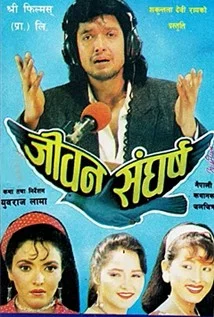
Jiwan Sangharsha
जीवन सङ्घर्ष
The film follows Akash, a sensitive poet who becomes increasingly disheartened by the materialistic, hypocritical world around him. His writings—deep, emotional, and socially critical—are repeatedly rejected by publishers who see no commercial value in his work. This rejection pushes him into despair, isolating him further from society.At his lowest point, Akash encounters Sanju, a worn‑down working girl who understands hardship more intimately than anyone else he has met. Despite her own struggles, she offers him shelter, compassion, and a sense of human connection he had long been deprived of. Their bond becomes the emotional center of the story, grounding Akash as he tries to rebuild his sense of purpose.Meanwhile, the publishing world that once dismissed him undergoes a dramatic shift when a newspaper mistakenly reports Akash’s death. Suddenly, his previously rejected poems are seen as valuable, and publishers rush to profit from his “posthumous” fame. This irony exposes the opportunism and moral decay of the society he had criticized all along.The film builds toward Akash confronting the world that ignored him in life but celebrates him in supposed death, forcing him to choose between anonymity, integrity, and the seductive pull of newfound recognition. The story mirrors themes from classic South Asian cinema—particularly the emotional arc of a misunderstood artist battling societal hypocrisy—while grounding itself in the Nepali social context of the 1990s.
Yubaraj Lama
—
Ranjit Gazmer
0
Synopsis
The film follows Akash, a sensitive poet who becomes increasingly disheartened by the materialistic, hypocritical world around him. His writings—deep, emotional, and socially critical—are repeatedly rejected by publishers who see no commercial value in his work. This rejection pushes him into despair, isolating him further from society.
At his lowest point, Akash encounters Sanju, a worn‑down working girl who understands hardship more intimately than anyone else he has met. Despite her own struggles, she offers him shelter, compassion, and a sense of human connection he had long been deprived of. Their bond becomes the emotional center of the story, grounding Akash as he tries to rebuild his sense of purpose.
Meanwhile, the publishing world that once dismissed him undergoes a dramatic shift when a newspaper mistakenly reports Akash’s death. Suddenly, his previously rejected poems are seen as valuable, and publishers rush to profit from his “posthumous” fame. This irony exposes the opportunism and moral decay of the society he had criticized all along.
The film builds toward Akash confronting the world that ignored him in life but celebrates him in supposed death, forcing him to choose between anonymity, integrity, and the seductive pull of newfound recognition. The story mirrors themes from classic South Asian cinema—particularly the emotional arc of a misunderstood artist battling societal hypocrisy—while grounding itself in the Nepali social context of the 1990s.
Videos
Manai Aljhiyo Mutu Aljhiyo - Nepali Movie JIBAN SANGHARSHA Song
trailer