
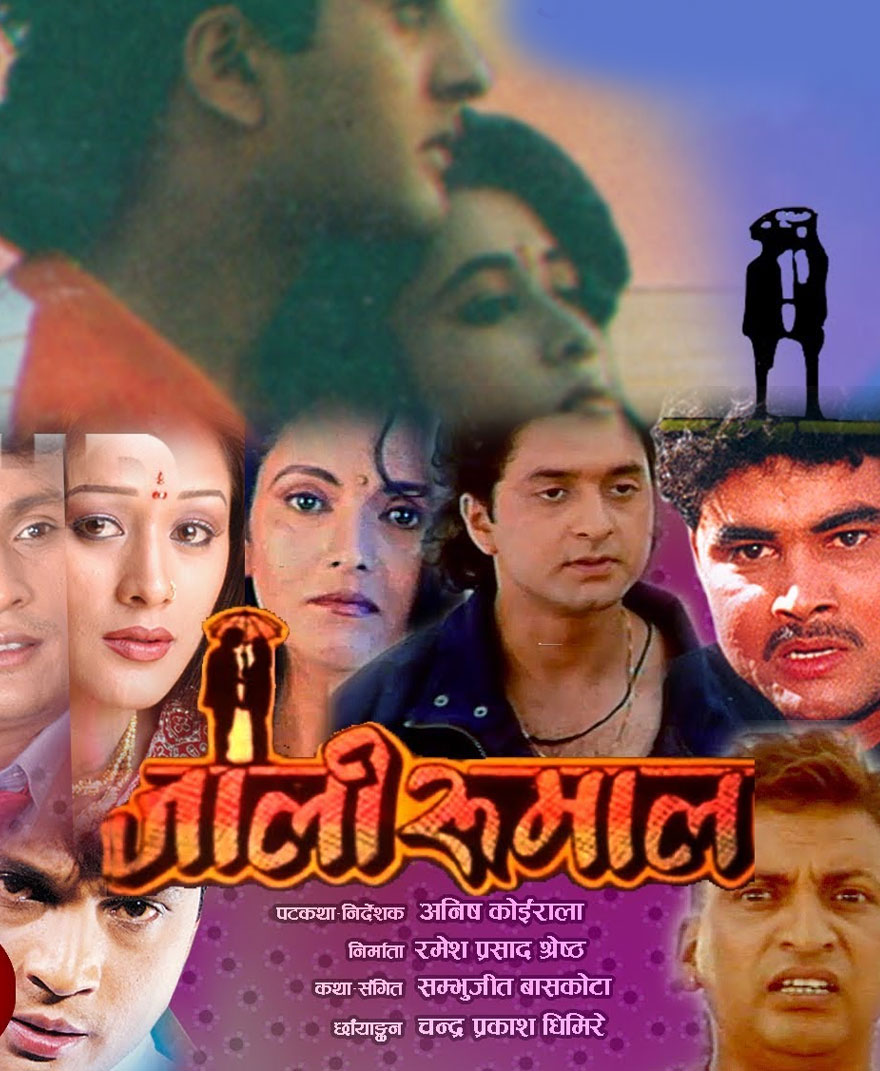
Jali Rumal
जाली रुमाल
Jali Rumal (1994), produced by Subhakamana Films and directed by Anish Koirala, unfolds as a dramatic story centered on love, misunderstanding, and the emotional struggles of intertwined families. The film brings together a strong ensemble cast including Sudhanshu Joshi, Shree Krishna Shrestha, Mithila Sharma, Ashok Sharma, Basundhara Bhusal, Prakash Thapa, Santosh Panta, Rajaram Poudyal, Tayab Shah, and Anju Ranjitkar.The narrative follows characters whose relationships are tested by jealousy, societal pressure, and personal ambition. As romantic bonds form and break, the symbolic jali rumal (embroidered handkerchief) becomes a recurring motif representing memory, loyalty, and emotional attachment. The film explores how small misunderstandings escalate into major conflicts, affecting not only lovers but entire families.The emotional arc intensifies as characters confront betrayal, sacrifice, and the consequences of their decisions. The story moves through moments of tenderness, heartbreak, and reconciliation, supported by expressive performances and a strong musical foundation crafted by Sambhujit Baskota, who also wrote the film’s story.Action sequences directed by Rajendra Khadgi, choreography by Basanta Shrestha, and cinematography by Chandra Prakash Ghimire add depth to the film’s dramatic tone. The movie’s runtime is 2h 6m, and it was released in Nepali theaters on 16 December 1994.Jali Rumal remains remembered for its emotional storytelling, strong cast, and the early performances of actors who later became major figures in Nepali cinema.
—
—
Shambhujeet Baskota
0
Synopsis
Jali Rumal (1994), produced by Subhakamana Films and directed by Anish Koirala, unfolds as a dramatic story centered on love, misunderstanding, and the emotional struggles of intertwined families. The film brings together a strong ensemble cast including Sudhanshu Joshi, Shree Krishna Shrestha, Mithila Sharma, Ashok Sharma, Basundhara Bhusal, Prakash Thapa, Santosh Panta, Rajaram Poudyal, Tayab Shah, and Anju Ranjitkar.
The narrative follows characters whose relationships are tested by jealousy, societal pressure, and personal ambition. As romantic bonds form and break, the symbolic jali rumal (embroidered handkerchief) becomes a recurring motif representing memory, loyalty, and emotional attachment. The film explores how small misunderstandings escalate into major conflicts, affecting not only lovers but entire families.
The emotional arc intensifies as characters confront betrayal, sacrifice, and the consequences of their decisions. The story moves through moments of tenderness, heartbreak, and reconciliation, supported by expressive performances and a strong musical foundation crafted by Sambhujit Baskota, who also wrote the film’s story.
Action sequences directed by Rajendra Khadgi, choreography by Basanta Shrestha, and cinematography by Chandra Prakash Ghimire add depth to the film’s dramatic tone. The movie’s runtime is 2h 6m, and it was released in Nepali theaters on 16 December 1994.
Jali Rumal remains remembered for its emotional storytelling, strong cast, and the early performances of actors who later became major figures in Nepali cinema.